After the Bin: A Practical Map of the US Mercury-Lamp Recycling Chain
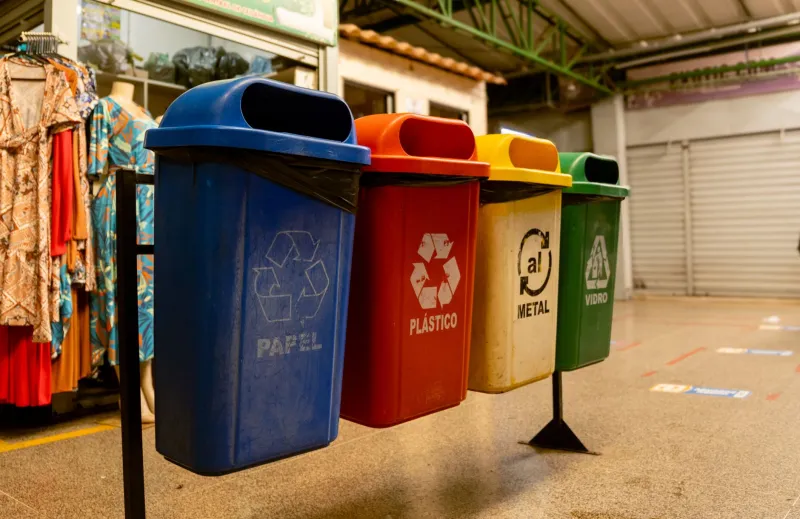
A retired fluorescent tube placed in a retailer take-back bin has not yet been recycled. It has entered a collection system. The difference matters because mercury lamps require controlled handling from the moment they leave a home, office, or school until the mercury is recovered or managed as hazardous waste. In the United States, that chain is shaped by federal universal waste rules, state environmental regulations, transportation requirements, and the operating permits of the facilities that process the lamps.
The first link: collection points
Retail take-back bins and municipal household hazardous waste sites are common entry points. Retail programs are convenient, but they are often designed for intact lamps and may refuse broken ones. Municipal sites may accept both intact and broken lamps, depending on local rules. A collection bin is not a recycling plant; it is a packaging and accumulation point. Lamps should be kept intact when possible, separated from other waste, and protected from breakage during transport.
For facility managers, the first question is whether the collection program is operating under universal waste rules or a state-specific mercury lamp program. The answer affects labeling, accumulation time limits, employee training, and recordkeeping. A bin with a familiar logo is not proof of downstream compliance.
Transport and consolidation
From collection sites, lamps move to consolidation points or directly to processing facilities. Packaging must prevent breakage during normal transport conditions. Intact lamps may be boxed in original packaging or in sturdy containers with padding. Broken lamps require separate containment so that mercury vapor and glass do not contaminate workers, vehicles, or other materials. Transportation rules can vary by state and by whether the lamps are managed as universal waste or hazardous waste.
Consolidation is a point of vulnerability because material from many generators is combined. A reputable program tracks containers, maintains manifests or shipping records where required, and can tell a generator where the material went. A program that cannot describe its downstream facility is a program that cannot demonstrate responsible management.
Crushing and vapor control
At a processing facility, mercury lamps are typically crushed in a controlled unit rather than simply broken in the open. The crushing chamber is designed to capture mercury vapor, glass, metal, and phosphor powder. Negative pressure keeps air moving into the system rather than out into the work area. Exhaust may pass through particulate filters and activated carbon or other mercury-control media before release.
This is the stage where engineering matters most. A lamp crusher without effective vapor control can release mercury to the workplace and the environment. Permitted facilities use enclosed equipment, ventilation controls, monitoring, and worker-protection procedures. The captured phosphor powder can contain mercury and is managed as a hazardous material. Glass and metal are separated for further processing or disposal.
Mercury recovery and separated materials
Recovered mercury may be sent to a permitted distillation or retorting operation, where it is heated and condensed into a concentrated form. The resulting mercury is then managed as a regulated commodity or waste, depending on market conditions and applicable rules. Some facilities store recovered mercury rather than sell it. The important point for generators is that the mercury does not disappear; it must be accounted for and sent to a permitted destination.
Separated glass may be recycled if it meets contamination limits, or it may be sent to a permitted landfill. Metal components can be recycled. Phosphor powder and filter media require hazardous waste management. The quality of separation determines how much material can be recovered and how much must be managed as waste.
What contamination limits mean
Contamination limits are not abstract numbers. They determine whether treated glass can be recycled, whether a facility may release treated wastewater, and whether a residue must be handled as hazardous waste. State rules and facility permits set the specific limits. A program that claims to recycle every part of a lamp without explaining residue management is making a claim that deserves scrutiny.
Universal waste rules are designed to streamline collection and transport, but they do not eliminate the need for proper downstream processing. Generators remain responsible for choosing a compliant destination. Facility managers should keep records that connect their lamps to a permitted processor and should review contracts for downstream accountability.
Questions to ask before trusting a drop-off program
Households can ask whether a collection site accepts broken lamps, where the material goes, and whether the site is a municipal hazardous waste program or a retailer bin with a downstream contractor. A retailer employee may not know the answer, but the store or its corporate sustainability office should.
Facility managers should ask more detailed questions. Who operates the collection and processing chain? Which permitted facility receives the lamps? Does the program accept broken lamps, and how are they packaged? What happens to the mercury, phosphor powder, glass, and metal? Can the vendor provide shipping records, certificates of recycling, or downstream audit information? Are workers trained and protected? Does the program comply with state-specific mercury lamp rules as well as federal universal waste requirements?
The most useful answer is specific. A responsible program can name its processing facility, describe its vapor-control and mercury-recovery steps, and explain where each output stream goes. A vague assurance that lamps are recycled is not enough for a material that contains mercury.
The household and facility role
The recycling chain begins with the person who removes the lamp. Keep lamps intact, tape or cap pins when practical, and avoid forcing a long tube into a small bin. Do not put mercury lamps in curbside recycling. Ask before dropping off broken lamps, and use a household hazardous waste site when the retailer bin is not designed for them.
A drop-off bin is a convenience, not a guarantee. The science of mercury recovery depends on controlled crushing, vapor capture, separation, and permitted downstream management. Households and facility managers do not need to become recycling engineers, but they should ask enough questions to know that the bin is connected to a responsible chain.