Before the Guests Arrive: A 2026 Household Plan for Retiring Holiday Strings, CFLs, and LEDs
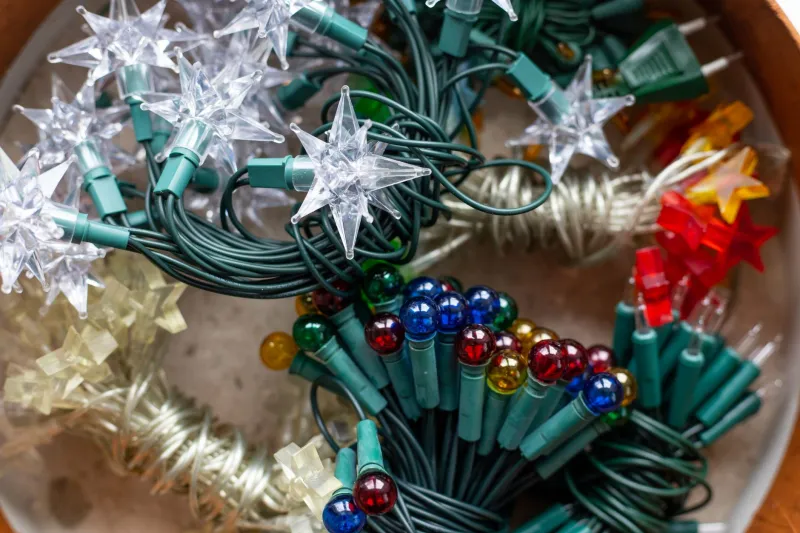
Every November, American households haul boxes down from the attic and plug in strands that have been coiled since January. Somewhere in that ritual, a string goes dark, a fixture refuses to light, and a small pile of failed lamps begins to accumulate on a workbench or in a kitchen drawer. The instinct is to sweep all of it into one bag and deal with it after the holidays. That is precisely the moment when improper disposal is most likely to happen — and the moment when a short, structured pass through the house is easiest to complete.
This checklist rests on one organizing principle: sort by lamp chemistry and construction first, then choose a route. Convenience-driven sorting is what puts mercury in landfills and copper in the trash.
Rule One: Split the Pile Into Two, Not Five
Decorative light strings and screw-base bulbs look like relatives and are handled nothing alike. A string is a small electronic assembly — wire, insulation, sockets, and usually a controller or power supply molded into the plug. A screw-base lamp is a sealed envelope, glass or polycarbonate, wrapped around a filament, a gas discharge tube, or an LED package with a driver board.
Treat the string as e-waste. Treat the screw-base lamp according to what is inside it. Everything else follows from that distinction.
What Each Category Actually Contains
- Incandescent holiday strings: copper conductors, PVC or rubber insulation, brass contacts, and a plug. The recovery value is almost entirely the copper.
- LED holiday strings: the same wire and sockets, plus a small driver in the plug housing and dozens of surface-mount diodes. Still e-waste, still not curbside.
- Compact fluorescent lamps (CFLs): a sealed glass tube containing a small quantity of mercury vapor. Federal rules cap general-purpose CFLs at roughly 5 milligrams of mercury per lamp, but the cap is not zero, and the vapor is what matters in a landfill or an incinerator.
- LED screw-base lamps (A19, PAR, candelabra): an aluminum heat sink, a plastic or glass globe, a driver board with capacitors, and a screw base that may be aluminum or brass.
- Halogen and traditional incandescent screw-base lamps: glass and metal only, which is why a minority of municipal programs still accept them.
Why the Mercury Rule Applies Only to the Fluorescents
Most US states regulate spent fluorescent lamps — including CFLs — as universal waste, and a large number prohibit disposing of them in ordinary household trash. The rules vary considerably by state and sometimes by county, so the practical rule for a household is simple: never place a CFL in a curbside bin, and never assume the recycling symbol on the package guarantees a local route.
Handling deserves one more sentence than most guides give it. If a CFL breaks, ventilate the room, avoid vacuuming the debris, and collect the fragments with stiff paper and tape. The exposure is small, but the cleanup protocol is not optional.
Light Strings Are Copper, Not Trash
A dead strand of holiday lights weighs very little and contains a surprising amount of recoverable metal. Processors that accept e-waste generally shred the strand, separate the copper from the insulation, and recover the brass contacts. In past seasons, national home-improvement retailers have run holiday light trade-in promotions that collected strings at store entrances, and several chains have maintained year-round collection bins for small electronics. Those programs change from year to year, so confirm the current policy with the store before loading the car.
The Routes That Actually Exist
Municipal household hazardous waste (HHW) facilities. The most reliable option for CFLs and often for LED lamps. Search your county or city waste authority rather than a general search engine; the operating hours and accepted-material lists are usually published as a PDF.
Retailer drop-off. Large home-improvement and hardware chains frequently host collection bins, sometimes seasonally. Ask specifically whether they accept CFLs, LED lamps, and light strings — the three are not always covered by the same bin.
Mail-back programs. Several lamp manufacturers and e-waste recyclers sell or provide prepaid shipping boxes. These are useful for households without a nearby HHW site and for anyone accumulating lamps slowly over a year.
County collection events. Many jurisdictions run one-day hazardous waste events in spring and fall. Check the schedule before the holiday season rather than after.
Certified e-waste processors. For a large volume of strings, call ahead to confirm acceptance and ask where the material goes downstream.
A Printable Pre-Guest Checklist
- Unplug every strand before handling, and inspect for frayed insulation or exposed wire
- Test strands one at a time and set aside the failures rather than the whole box
- Separate string lights from screw-base bulbs into two containers
- Identify CFLs by shape and by any mercury warning printed on the base
- Bag CFLs individually in padding or return them to their original cartons
- Locate the nearest HHW facility and confirm its hours online
- Call the retailer to verify which lamp types its bin accepts
- Label the storage bin so next year's cleanup starts ahead of the curve
- Keep all lamps out of curbside recycling, where they contaminate glass streams
Transport and Handling Notes
Keep CFLs in the trunk or cargo area rather than the passenger cabin during a long drive, and cushion them so they do not shift. Do not dismantle LED lamps to remove the driver board; processors handle that step, and the capacitors inside can retain a charge. If a recycler instructs you to cut the plug from a light string, follow that instruction only when it is given directly — some programs require the string intact for counting and sorting.
A single afternoon of sorting, one phone call, and one trip to a drop-off site is usually enough to clear a household's accumulated lamps. The value is not only in the diverted material. It is in establishing a routine that survives past January, when the box goes back into the attic and the next batch of failures begins to collect.