The Prepaid Envelope Illusion: Rethinking 'Free' CFL Mail-Back Recycling in 2026
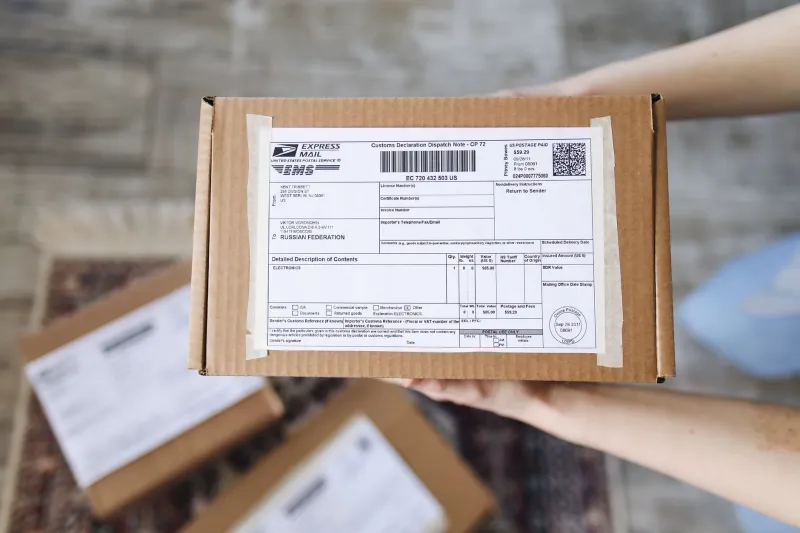
Prepaid mail-back kits arrive with a reassuring promise: place the dead compact fluorescent lamp in the box, seal it, drop it in the mail, and forget it. In 2026, that convenience is real, but the word 'free' deserves scrutiny. Most kits are not free in any economic or environmental sense; the cost is simply moved into the purchase price, the packaging, the parcel network, and the risk of breakage.
What Is Actually in the Box
A typical mail-back kit includes a corrugated outer box, molded or foam cushioning, a plastic liner, absorbent material, a zip closure, and a prepaid shipping label. The good kits are engineered for the fragility of glass tubes and the mercury vapor inside them. The cheap ones are not. Capacity is usually stated in number of lamps, but the more useful number is linear inches. A kit that holds four 13-watt spiral CFLs may not safely hold four long linear tubes, and a kit designed for tubes may be oversized for a handful of spirals.
The environmental case for mail-back depends on what happens in transit. A parcel travels through sorting centers, trucks, and delivery vehicles. If a lamp breaks, the kit's liner and absorbent may contain the glass and mercury, but the package has still failed its primary job. Breakage can contaminate other items in the same parcel, create a cleanup problem for a postal worker, and undermine the recycling claim. For households, ordinary CFLs are generally not managed as regulated hazardous waste under federal rules, but state disposal bans and kit instructions still matter. A broken lamp in a prepaid envelope is not a compliance strategy; it is a small mercury-release incident with a return address.
The Cost Ledger
The sticker price is only the first entry. Add the cost of the kit itself, the embedded cost of prepaid postage, the packaging materials, and the time spent storing and mailing the lamps. Then add the breakage premium: the chance that a lamp arrives damaged and the kit must be replaced or the lamp must be managed another way. For a household with two or three lamps, the per-lamp cost can be several times the cost of dropping them at a local household hazardous waste event.
There is also a carbon ledger. Parcel shipping is efficient per ton over long distances, but a single small box containing two CFLs is not a ton. The last-mile delivery step is emissions-intensive, and the kit's protective packaging has its own material footprint. Driving to a local household hazardous waste site is not automatically better. A 30-mile round trip in a large vehicle for one lamp is a poor trade. But a stop at a municipal facility on an already-planned errand, or a retailer take-back counter on the way home, can beat a dedicated parcel shipment.
Where Mail-Back Wins, Narrowly
Mail-back makes genuine sense in specific situations. A rural household with no household hazardous waste site within a reasonable distance may have no practical alternative. A person with limited mobility may find a prepaid kit safer than transporting fragile lamps. A small facility with scattered satellite locations might use a documented mail-back program when no permitted recycler serves those sites. A one-off cleanup of a few lamps in a community center may also qualify, provided the kit is rated for the lamp type and the program provides a recycling certificate.
Even then, the user should ask three questions. Does the kit accept the specific lamp type and length? Does the program send the lamps to a permitted recycler or destination facility, and can it provide documentation? What happens if a lamp breaks in transit? A kit that cannot answer those questions is a convenience product, not a recycling program.
A Better Default for Most Households
For most US households, the stronger default is local: a municipal household hazardous waste facility, a county collection event, or a retailer take-back program that accepts CFLs. These options usually consolidate lamps into bulk shipments, which is more efficient per lamp than individual parcels. They also keep the lamps in a managed waste stream with trained staff and proper containers. The tradeoff is time and travel, so the best choice depends on distance, hours, and whether the trip can be combined with something else.
Facilities and small businesses should not rely on household mail-back kits as a routine compliance solution. Commercial lamp waste is better handled through a permitted recycler with bulk packaging, shipping papers, and recycling documentation. A prepaid envelope is designed for a household's occasional lamp, not for a maintenance closet's annual turnover.
The prepaid kit is not a scam, but it is not a free lunch. It is a small-scale logistics system with real costs and real failure modes. The sensible question is not 'Is the envelope free?' but 'What is the total cost, the breakage risk, and the final destination?' When a local option exists, use it. When it does not, mail-back can be a reasonable bridge - provided the kit is sturdy, the program is documented, and the user understands that convenience is being paid for somewhere.