The Box in the Rafters: A 2026 Estate-Cleanout Protocol for Legacy Lamps
An estate cleanout is an inventory problem with environmental consequences. Behind the furniture and paperwork, attics, garages, basements, and utility closets often hold boxes of lamps that were stored years ago and never labeled. Some are ordinary incandescent bulbs. Others are fluorescent tubes, compact fluorescents, or high-intensity discharge lamps that contain mercury and require careful handling. The task is not to diagnose every bulb in the house. It is to establish a safe, defensible sequence for identifying likely hazards, preventing breakage, and routing materials to the right destination in 2026.
Begin With a Room-Level Survey
Before opening boxes, treat the cleanout as a survey rather than a sorting sprint. Set aside gloves, safety glasses, a headlamp, rigid containers, cardboard tube sleeves, zip-top bags, labels, and a broom and dustpan. Do not bring a household vacuum into the work area; standard vacuums can disperse mercury vapor and fine particles if a lamp breaks. Keep children and pets out of the room, and provide ventilation without creating strong drafts that could knock fragile tubes from shelves.
Work from the least fragile items to the most fragile, and photograph labels before moving anything. Do not shake, twist, or test unknown lamps. An old fluorescent tube that still fits a fixture is not evidence that it is safe to energize, and an estate-sale organizer should not plug in unidentified discharge lamps to see whether they light. The goal is to preserve the lamp intact long enough for a qualified recycler or household hazardous waste program to accept it.
Use an Identification Ladder, Not Guesswork
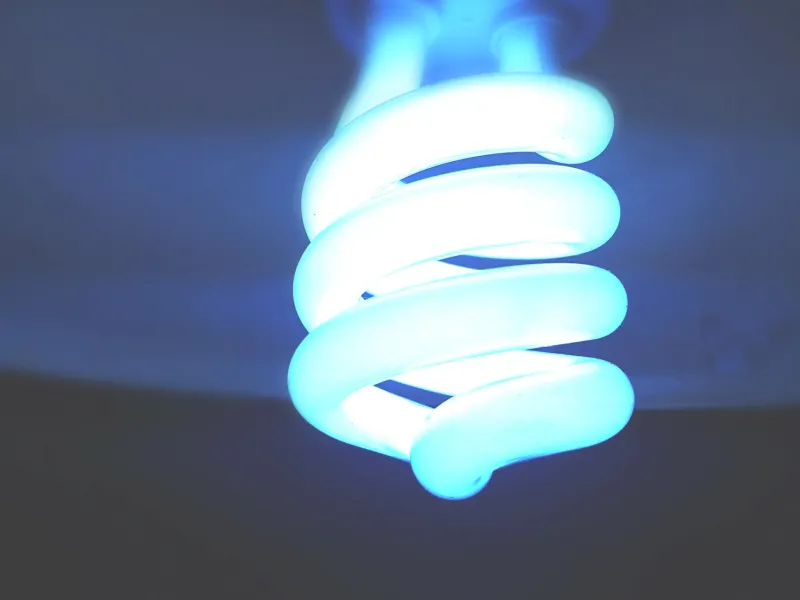
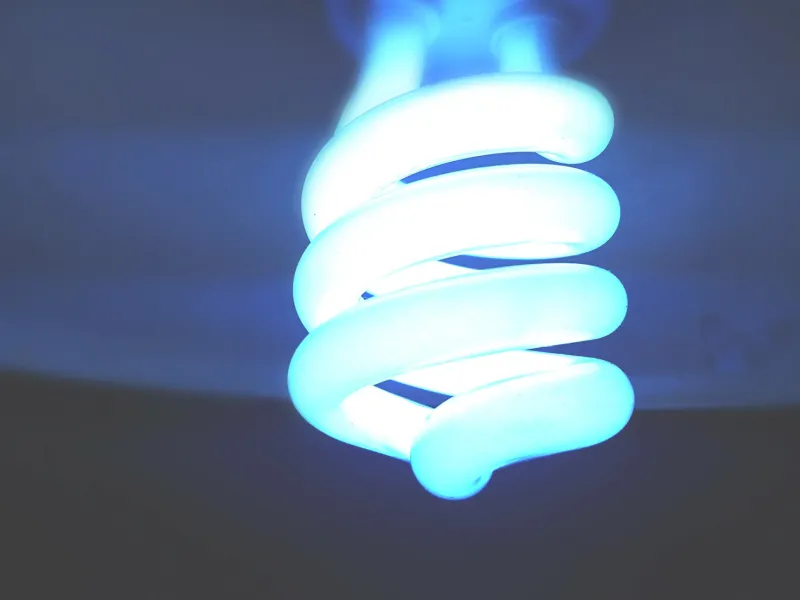
Shape, markings, and age are the practical clues. Linear fluorescent tubes are long glass cylinders with bi-pin or single-pin bases and almost always contain mercury. Compact fluorescents appear as spirals, twin-tube shapes, globes, or candle shapes; they also contain mercury. High-intensity discharge lamps include mercury vapor, metal halide, and high-pressure sodium types, and most contain mercury in the arc tube. LED lamps do not contain mercury, but they are electronic waste and should not be treated as ordinary trash. Incandescent and halogen bulbs contain no mercury, though their glass can break.
Markings can help but are not decisive. Look for Hg, mercury, contains mercury, CFL, fluorescent, or a manufacturer and wattage. Absence of a warning does not prove a lamp is mercury-free, especially with older stock. Unmarked discharge lamps, novelty bulbs, and neon or specialty tubes should be treated as suspect until a recycler or local program confirms otherwise. The practical rule for estate cleanouts is conservative: if the lamp is not clearly incandescent, halogen, or LED, place it in the suspect category.
Older fluorescent fixtures deserve a separate note. Magnetic ballasts manufactured before 1979 may contain polychlorinated biphenyls, or PCBs. The ballast is not the lamp, but the two are often stored together. Do not dismantle fixtures or remove ballasts during a household cleanout. Keep them intact and ask the recycler or hazardous waste program how to manage them.
Separate Into Four Routes
The first route is intact, known mercury-containing lamps: fluorescent tubes, CFLs, and HID lamps. These should go to a lamp recycler, a municipal household hazardous waste facility, or a retailer or mail-back program that explicitly accepts them. The second route is unknown or suspect lamps. Bag and label them as suspect mercury-containing lamps and send them to the same hazardous waste or recycling channel. The third route is non-mercury lamps: incandescent and halogen bulbs can usually go in household trash if broken glass is wrapped, while LEDs should go to electronics recycling where available. Local rules vary, so confirm before placing anything curbside.
The fourth route is broken lamps. A broken fluorescent or CFL is not a sweeping problem. Ventilate the room, keep people away, put on gloves, and use stiff paper or cardboard to lift glass and powder. Do not vacuum. Place debris in a sealed glass jar or double bag, and follow local hazardous waste guidance for disposal. If a spill kit is available, use it. If not, contact the local environmental health office for instructions.
Prevent Breakage During the Move
Most mercury exposure risk in a cleanout comes from handling, not from the lamp in normal use. Slide fluorescent tubes into cardboard sleeves or the original packaging, keep them supported and horizontal, and avoid stacking weight on them. Place CFLs in padded rigid boxes and keep them upright. Do not tape lamps together or carry several loose tubes in one hand. Use dish-pack boxes for short moves and label each box with the lamp type and the word fragile.
If a lamp breaks during transport, stop and contain the area. Do not continue sorting. A single broken tube can release mercury vapor, and the debris should be managed as a hazardous waste stream rather than mixed with general refuse.
Keep a Paper Trail
Estate-sale organizers and haulers should document what left the property. A simple inventory sheet with photographs, lamp types, quantities, and the receiving facility is useful for the family and for the organizer. Businesses that generate spent mercury lamps are generally subject to federal universal waste rules, and state rules may be stricter. Households are often exempt from some federal requirements, but many states and municipalities still prohibit mercury lamps in curbside trash. Confirm with the state environmental agency or the local solid waste authority.
When the family asks what to do with a box of mystery bulbs, the answer should be short: do not put them in the trash, do not test them, and do not sell them as working lamps. Label the box, keep it closed, and route it to a recycler or household hazardous waste program. In an estate cleanout, caution is not delay. It is the most efficient way to keep legacy lamps out of the waste stream and out of the air.